58,000+ neighborhoods · sub‑second ranking
Neighborhood intelligence & preference‑driven home search
Owned product strategy and engineering for a PropTech platform ranking 58,000+ neighborhoods against user priorities in sub-second time, combining market data with location intelligence.
Launch window
1,000+ users
Index size
58,000+
Sales records
900,000+
Search latency
<1s
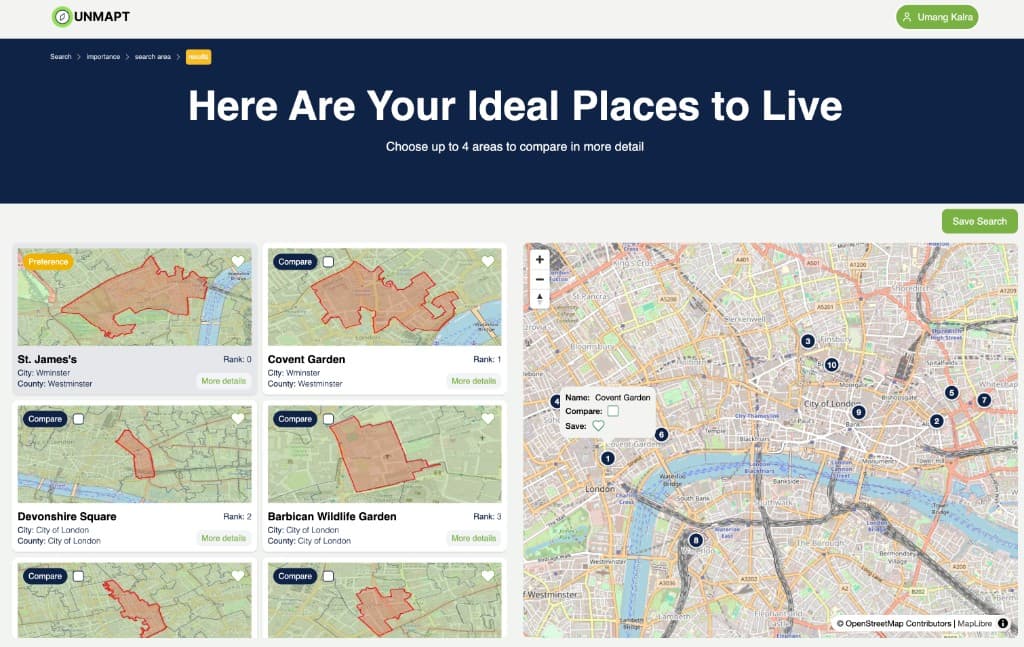
I owned the product and technical thread for a neighborhood intelligence SaaS aimed at serious property seekers: match people to places using price bands, transport, schools, safety, flood context, amenities, and longitudinal sales signals — then make the answer explorable on an interactive map with side‑by‑side comparison and pass‑based access to deep PDF reports. The north star was confidence, not another Zillow clone.
The problem was classic fragmentation: spreadsheets, PDFs from councils, noisy blogs, and map tabs that never agreed. Buyers needed one opinionated system that could ingest heterogeneous datasets, normalize them into comparable scores, and expose a transparent ranking model users could steer with weights. We indexed 58,000+ neighborhoods and wired in 900,000+ property sale observations so rankings reflected markets, not vibes.
Engineering-wise I drove Django/DRF services, Redis/Celery for async scoring and report generation, PostgreSQL/PostGIS for spatial joins, and a React + Tailwind + Leaflet map stack with a Next.js surface for acquisition flows. Map layers pulled from open basemap tiles plus commercial geocoding/routing APIs; payments, invoices, and receipts ran through Stripe with email delivery for every pass purchase and report unlock — fewer manual finance touches, cleaner compliance story.
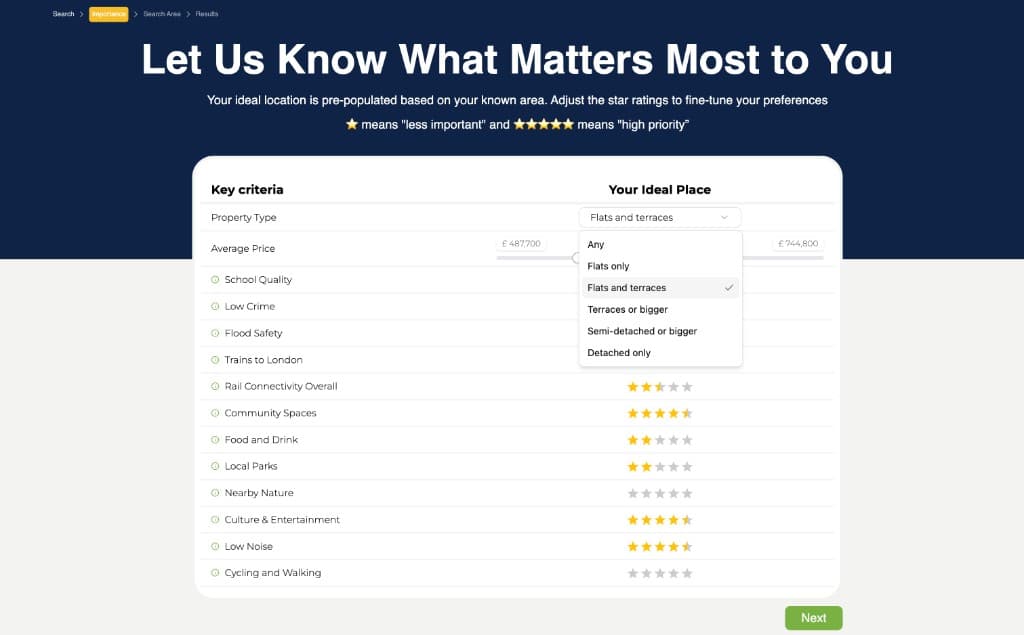
Product leadership showed up in how we translated fuzzy human language (“we care about schools more than nightlife”) into a finite feature set: star‑weighted dimensions, guardrails on absurd combinations, sane defaults per search area, and guard‑banded price sliders so users never dead‑ended. We instrumented activation ruthlessly — 80% of new users completed at least one ranked search in session one — and tuned onboarding until that curve held across traffic spikes.
We kept pricing and billing intentionally simple: passes with credit top‑ups for searches and downloadable insight packs, automated emails for receipts and report delivery, and an admin console for user management and scheduled data refresh so ops did not live in SQL. Search performance stayed the headline reliability claim: sub‑second ranking across the full neighborhood index after caching hot facets and batching heavy aggregates offline.
Reliability mattered because trust is the product: we maintained 99.5% uptime after launch while iterating weekly. If you are hiring a technical lead or PM who can span ranking systems, stakeholder‑ready narrative, and map‑first UX, this is the shape of work — quantitative discovery, opinionated defaults, and a backend that keeps promises when marketing turns the ads on.
Search and decision surfaces
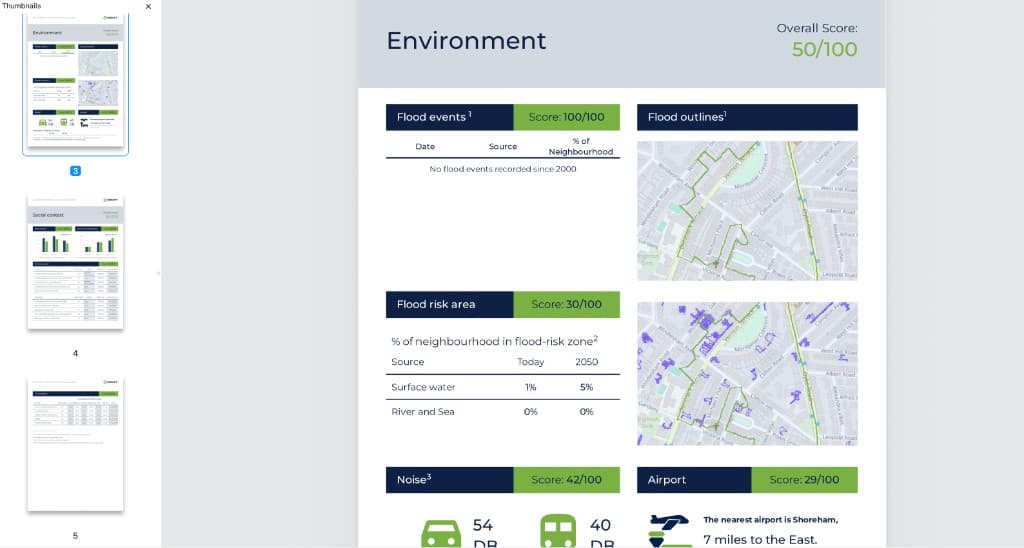
How buyers steer rankings with weighted lifestyle signals and what they receive in a downloadable neighborhood report — illustrative UI, client branding removed.
Outcomes
Drove early traction, strong activation, and reliable performance with sub-second ranking, high uptime, and a monetization model teams could operate confidently.