10,000+ users · 100+ exports/day
National geospatial data marketplace & self‑serve exports
Led a country-scale geospatial marketplace where planners and operators could discover, price, and export standardized data through one map-first workflow.
Registered users
10,000+
Daily exports
100+
Prep time
~70% faster
Repeat usage
90%+
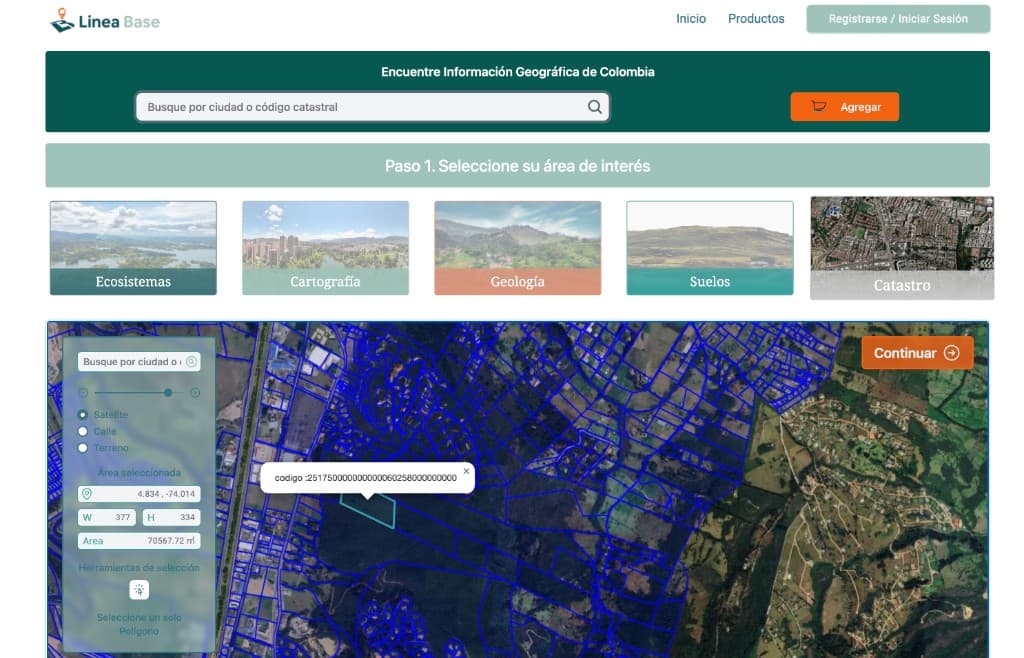
I led product and engineering for a national geospatial data marketplace: one place for planners, environmental consultants, and GIS teams to discover, price, and download standardized administrative, environmental, and cadastral layers for a single country program — without stitching half a dozen government portals. The wedge was simple: draw or select an area of interest on a map, pick layers from a curated catalog, pay, and receive clipped files in professional formats ready for analysis.
The problem was fragmentation and friction: public datasets disagreed on identifiers, refresh cadence was opaque, and non‑GIS staff burned hours on downloads, reprojections, and broken metadata. Technical buyers needed a single source of truth with validated schemas, transparent versioning, and admin‑controlled refresh jobs so “current” actually meant current. We designed the system around AOI‑scoped commerce — every order is a bounded spatial job with deterministic outputs.
On the backend I drove Flask services with SQLAlchemy on PostgreSQL/PostGIS, Redis/Celery for asynchronous clipping, packaging, and email delivery, and map services behind a familiar React + Tailwind + Leaflet client. Integrations stayed deliberately generic in architecture: open basemap tiles, commercial basemap/geocoding APIs where required, and a map server layer for published datasets — all orchestrated so pricing, inventory, and geometry stayed consistent from preview to download.
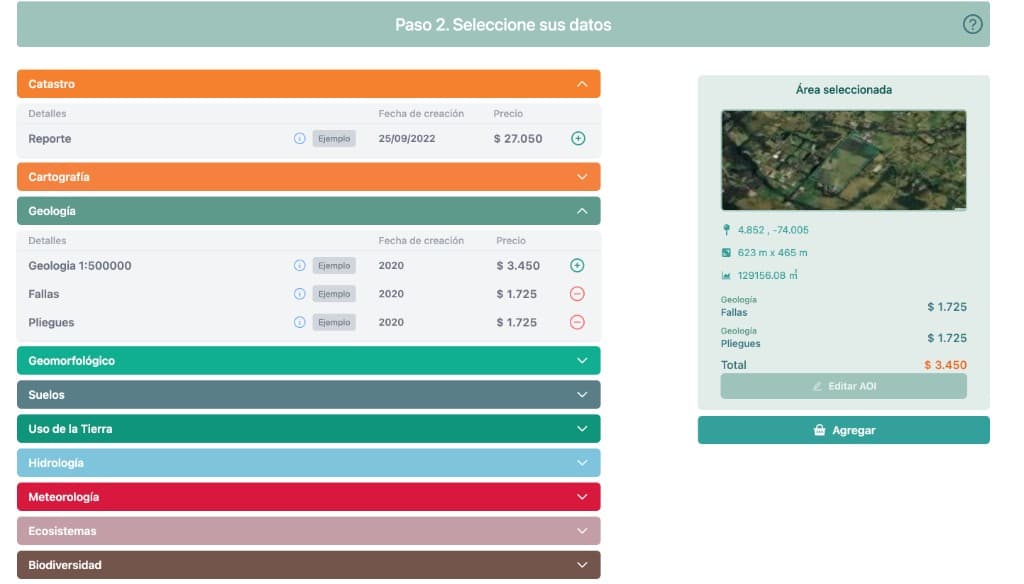
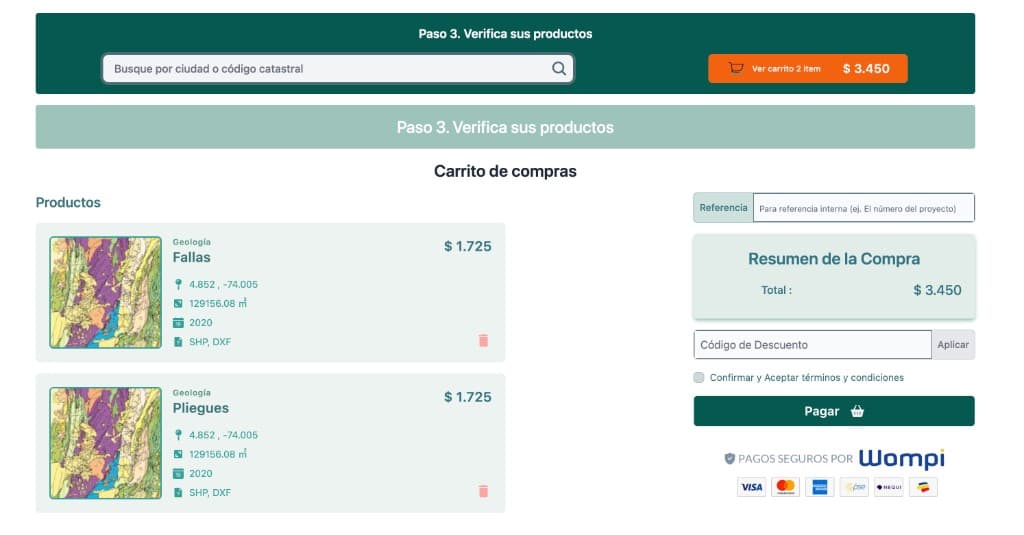
Product work meant translating regulator‑speak and partner SLAs into backlog items normal humans could ship: stepwise purchase funnels, preview thumbnails tied to exact extents, clear format matrices (including SHP and CAD‑friendly exports), and post‑payment notifications with signed download links once jobs finished. I partnered with finance and ops on a regional payment gateway so local cards and bank rails worked without turning engineering into a payments company — receipts, webhooks, and reconciliation were first‑class.
Operations did not drown in tickets because we invested in self‑serve: user dashboards for order history and re‑downloads, and an admin console for catalog curation, transaction review, dataset refresh, and user management. Throughput became the brag: more than 100 dataset generations per day at peak as automated clipping and export pipelines absorbed bursty demand without manual intervention.
The numbers tell the hiring story: 10,000+ registered users actively exploring the catalog, roughly 70% faster data preparation versus the old portal‑hopping workflow for typical planning studies, 90%+ repeat usage among customers who routinely need refreshed or adjacent AOIs, and thousands of successful transactions on the new rails. If you need a technical lead or PM who can own map‑centric commerce, spatial job orchestration, and cross‑functional delivery in a regulated data context, this is that profile of work.
From map to download
The self-serve path planners use: pick layers against an area of interest, see live pricing, then check out for clipped exports — representative screens from the national marketplace.
Outcomes
Built a durable AOI-to-delivery product flow with high repeat usage, secure transactions, and automated exports that reduced operational friction for data teams.