200+ daily active users
Enterprise supplier compliance & deforestation monitoring
Led product and technical delivery for a confidential geospatial compliance platform used by global supply-chain teams — 24M+ hectares monitored, 200+ daily active users, and materially faster reporting operations.
DAU
200+
Reporting cycle
~60% faster
Cloud cost
~20% lower
Monitored scope
24M+ ha
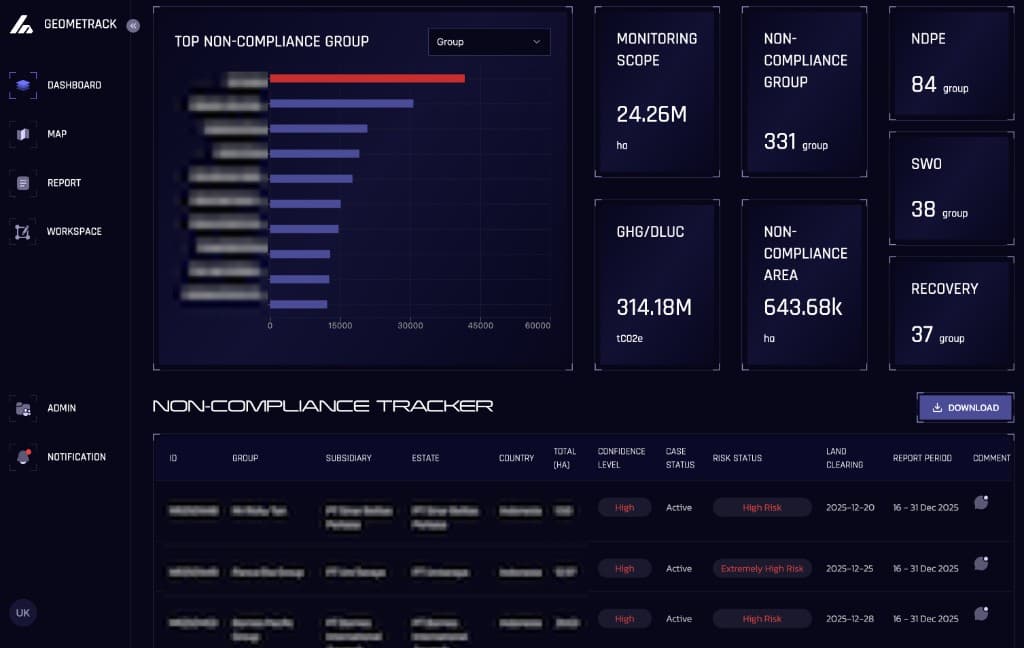
I led the hardest threads of a multi‑year program: a centralized platform for deforestation monitoring, supplier traceability, and NDPE‑aligned compliance for global FMCGs, processors, and agri‑supply partners with strict supplier programs. The mandate was blunt — replace brittle, human‑synced bi‑weekly packs with something program leads would open daily. We landed 200+ daily active users and a single operating picture across 24M+ hectares of monitored context.
The old operating model bled time: no authoritative venue for supplier compliance data, bi‑weekly reporting stitched from email and files, executives without trustworthy visuals, and imports that failed silently. I reframed the work as a system problem — canonical data model first, APIs second, UI third — so auditability and “map vs. dashboard” consistency were designed in before scale, not debated after incidents.
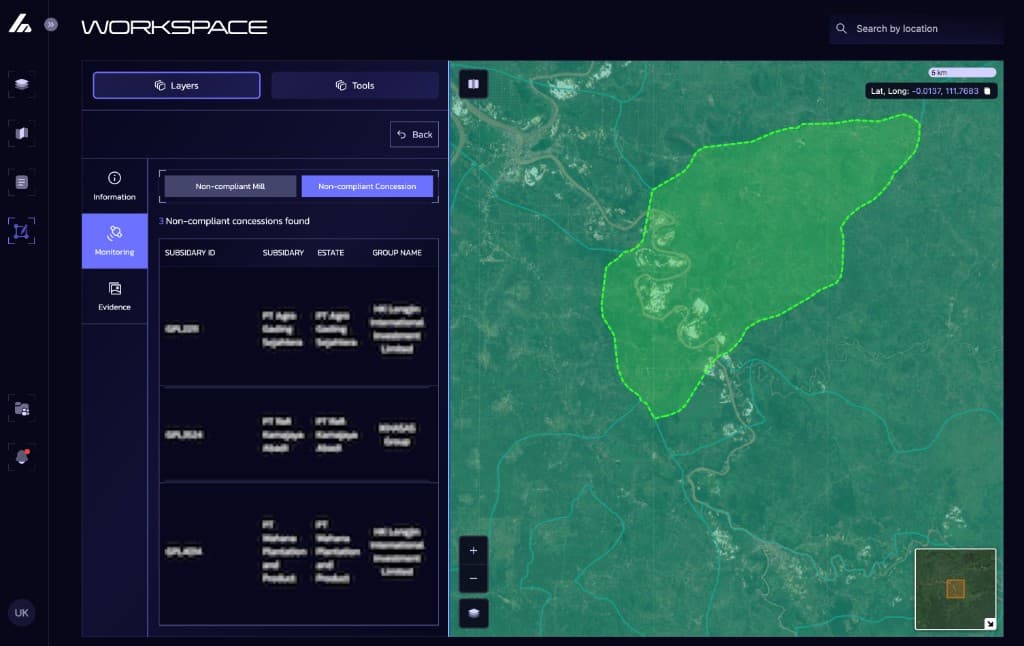
On engineering I owned complex backend design and delivery: Django/DRF services, Redis/Celery for long‑running jobs, PostgreSQL/PostGIS for spatial truth, and map and raster pipelines wired to internal tile services and commercial imagery where contracts allowed. Jobs had to be idempotent, recover from partial failure, and enforce clear contracts between geometry, aggregates, and dashboard metrics so analysts never argued over a single hectare.
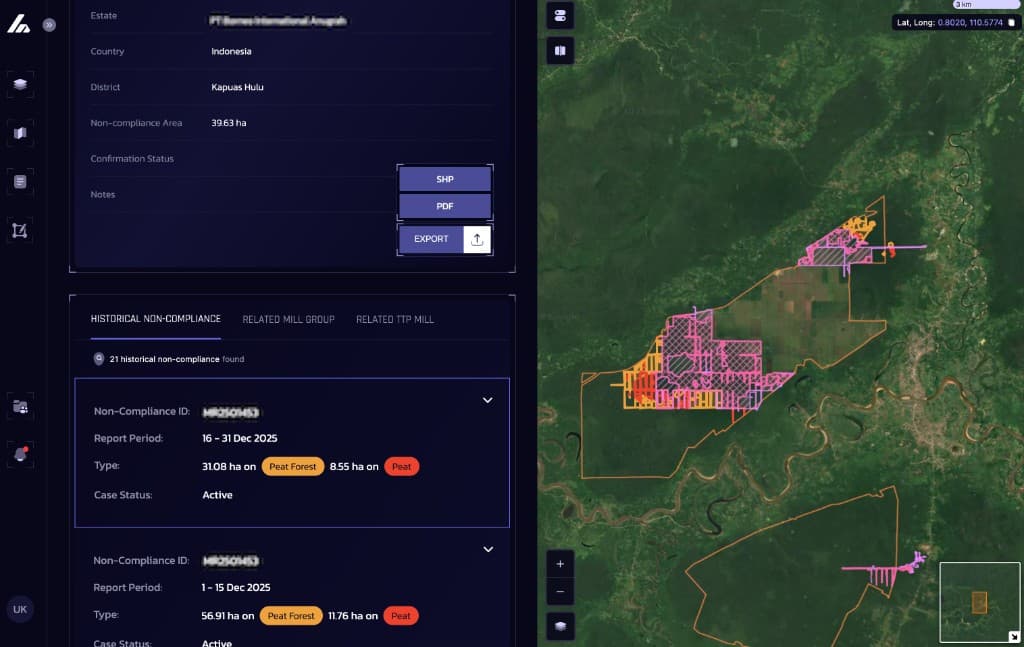
I stayed in the product chair with stakeholders: discovery with program leads, roadmap calls against compliance windows, and turning verbatim client feedback into shippable work — permission models, performance fixes, admin tooling. When teams asked to “see proof on the map,” we shipped in‑map playback for photos, video, and 360° ground evidence with smooth in‑browser delivery instead of yet another file share.
We shipped mirrored client and admin experiences: self‑serve maps, charts, PDF and Shapefile exports, notifications, and chat; admins ran imports, case oversight, and comms. Organization‑level membership controlled full vs. limited visibility. After hardening AWS (compute behind load balancers, managed relational storage, object storage, API edge, infrastructure‑as‑code) we cut recurring cloud spend by about 20% without sacrificing headroom for peak reporting weeks.
The headline outcomes recruiters care about are simple: 200+ people in the product every day, reporting and data‑sharing roughly 60% faster than the legacy bi‑weekly cycle, and infrastructure spend materially down while trust with clients went up. My bias throughout: make geospatial + compliance logic boringly reliable underneath, and legible to humans who live under audit pressure.
How program teams operate
Representative views of the map workspace analysts use daily and the executive dashboard that replaced fragmented reporting — anonymized excerpts, not a full product spec.
Outcomes
Established one trusted operating system for compliance: 200+ daily actives, faster reporting cycles, and lower cloud spend through architecture hardening.